|

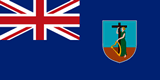
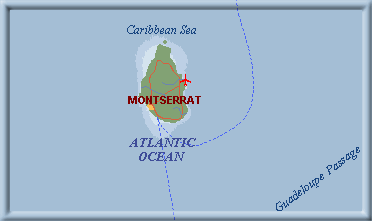
Detailed Map
Montserrat is small and only the northern third of the island is habitable
because of the Soufriere Hills Volcano. Plymouth was the island's capital,
but was cleared in 1995 because of the danger and Salem became the largest
settlement, although it too had to be temporarily abandoned in 1997.
Tourism is still low-key, but visitors are welcome and the island pace is
slow and relaxed.
English is the main language, spoken with an island patois and an irish
brogue! Due to some old Irish settlement, island dances mix Irish steps
with African beat and St. Patrick's Day is a public holiday.
Currency is the Eastern Caribbean Dollar, but US$ is widely accepted.
Emergency numbers
Medical 491-2802
Police 491-2555.
The main hospital (Tel. 491-2836) is in St Johns.
Volcano
The best places to view the volcano are Garibaldi Hill and the Daytime Entry
Zone at Plymouth.
Snorkelling
Best snorkelling is at Little Bay, with an underwater trail west of the
jetty.
Beaches
Beaches are mostly black sand and small. The only white-sand beach is at
Rendezvous Bay, only reachable by boat.
Food
Food is Creole/Continental, with local specialities including "Mountain
Chicken" (frog) and "Goat Water" - a thick stew of goat meat. The Bitter
End Beach Bar is found at the ferry terminal at Little Bay. Good
reputation, but casual. Bring insect repellent as the mosquitoes are huge.
Restaurants often don't open unless they have bookings and often don't serve
after 7pm.
Accessibility
Yachts are not allowed to land on the exclusion zone. Little Bay is the
only point of entry and immigration is through Montserrat Port Authority
(Tel 491-3816, VHF 16).
It is advisable to pick up an up-to-date map on arrival as the exclusion
zones can change.
Climate
Climate in October: high 31 degree F, low 23 degree F. No defined wet
season.
Tours
An 8 hour tour of the island is offered by taxi (4 person max.) at around
EC$ 120.
Links
www.visitmontserrat.com
Lonely Planet Guide
|
|